La Colección
La Colección
Room 1: Mannerism
The beginnings of colonial Peruvian art were introduced through the mannerist language during the 16th century, along with the expansion of the Society of Jesus in the Viceroyalty of Peru. After their arrival at the port of Callao in 1568, the Jesuits established a network of schools, residences, and doctrines that accompanied an evangelization project based on the knowledge of Amerindian languages and cultures. Aware of the power of art as a pedagogical and conversion tool, they promoted the arrival of artists trained in Europe, including the Italian painter Bernardo Bitti, a key figure in the dissemination of mannerism in the temples of the Viceroyalty.
Together with Mateo Pérez de Alessio and Angelino Medoro, Bitti introduced a style characterized by elongated figures, expressive poses, refined traits, and a marked chromatic and luminous intensity. The works gathered in this room not only reflect an imported aesthetic adapted to a new context but also the fundamental role that art played in the early processes of evangelization in America, reinforcing a religion that was taking its first steps on the continent.
Room 1: Mannerism
The beginnings of colonial Peruvian art were introduced through the mannerist language during the 16th century, along with the expansion of the Society of Jesus in the Viceroyalty of Peru. After their arrival at the port of Callao in 1568, the Jesuits established a network of schools, residences, and doctrines that accompanied an evangelization project based on the knowledge of Amerindian languages and cultures. Aware of the power of art as a pedagogical and conversion tool, they promoted the arrival of artists trained in Europe, including the Italian painter Bernardo Bitti, a key figure in the dissemination of mannerism in the temples of the Viceroyalty.
Together with Mateo Pérez de Alessio and Angelino Medoro, Bitti introduced a style characterized by elongated figures, expressive poses, refined traits, and a marked chromatic and luminous intensity. The works gathered in this room not only reflect an imported aesthetic adapted to a new context but also the fundamental role that art played in the early processes of evangelization in America, reinforcing a religion that was taking its first steps on the continent.
Room 1: Mannerism
The beginnings of colonial Peruvian art were introduced through the mannerist language during the 16th century, along with the expansion of the Society of Jesus in the Viceroyalty of Peru. After their arrival at the port of Callao in 1568, the Jesuits established a network of schools, residences, and doctrines that accompanied an evangelization project based on the knowledge of Amerindian languages and cultures. Aware of the power of art as a pedagogical and conversion tool, they promoted the arrival of artists trained in Europe, including the Italian painter Bernardo Bitti, a key figure in the dissemination of mannerism in the temples of the Viceroyalty.
Together with Mateo Pérez de Alessio and Angelino Medoro, Bitti introduced a style characterized by elongated figures, expressive poses, refined traits, and a marked chromatic and luminous intensity. The works gathered in this room not only reflect an imported aesthetic adapted to a new context but also the fundamental role that art played in the early processes of evangelization in America, reinforcing a religion that was taking its first steps on the continent.
Room 2: Marian Invocations
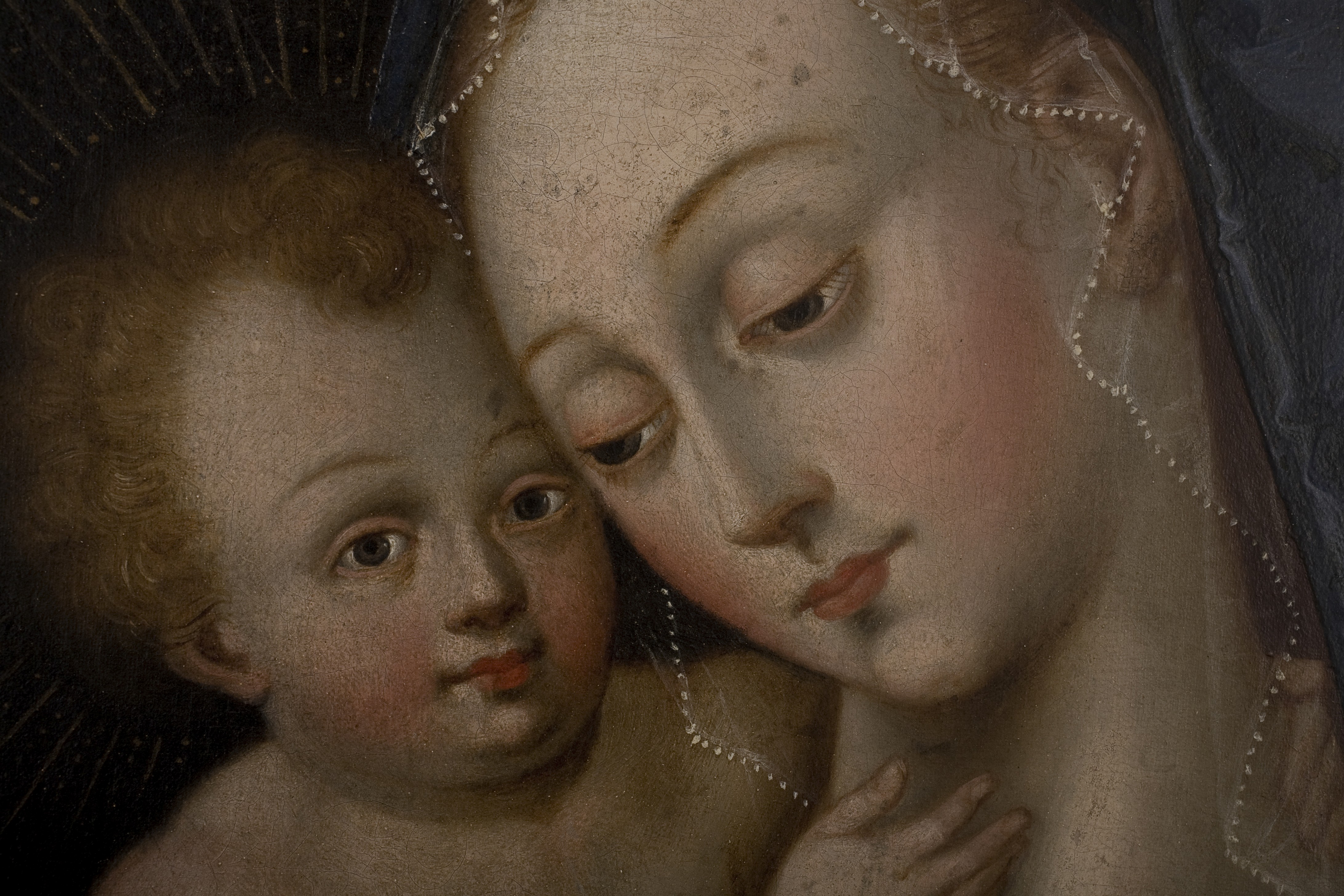
The central role of the Virgin Mary in the context of the Viceroyalty of Peru is understood in her contribution as a mediating figure between God and men. Her cult, questioned by Protestantism during the Reformation, was reaffirmed by the Catholic Church in the context of the Counter-Reformation and actively spread in the American territories. Religious orders played a fundamental role in this evangelizing process, introducing in Peru Marian invocations of Spanish origin, such as Our Lady of the Rosary, promoted by the Dominicans; the Immaculate Conception, spread by the Franciscans; or Our Lady of Loreto, driven by the Jesuits.
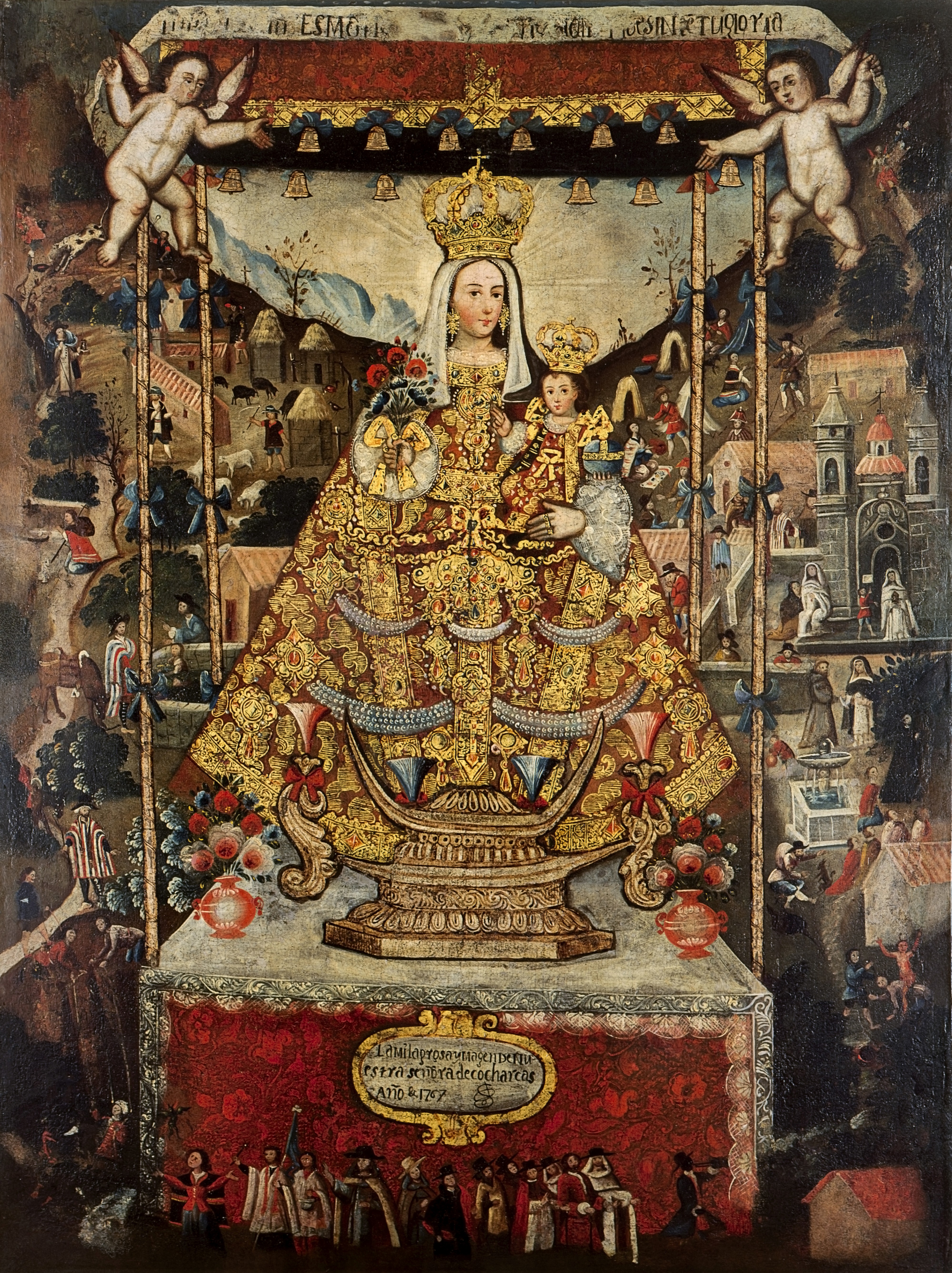
Alongside these images, the room presents Marian invocations that emerged locally, such as Our Lady of Pomata, from Cocharcas or Copacabana, which demonstrate the special reception that the figure of Mary had among the Andean population. These representations incorporate attributes, narratives, and devotions of their own, reflecting a process of re-signification of a cult of European origin, adapted to the beliefs and sensibilities of the American context.
Room 2: Marian Invocations
The central role of the Virgin Mary in the context of the Viceroyalty of Peru is understood in her contribution as a mediating figure between God and men. Her cult, questioned by Protestantism during the Reformation, was reaffirmed by the Catholic Church in the context of the Counter-Reformation and actively spread in the American territories. Religious orders played a fundamental role in this evangelizing process, introducing in Peru Marian invocations of Spanish origin, such as Our Lady of the Rosary, promoted by the Dominicans; the Immaculate Conception, spread by the Franciscans; or Our Lady of Loreto, driven by the Jesuits.
Alongside these images, the room presents Marian invocations that emerged locally, such as Our Lady of Pomata, from Cocharcas or Copacabana, which demonstrate the special reception that the figure of Mary had among the Andean population. These representations incorporate attributes, narratives, and devotions of their own, reflecting a process of re-signification of a cult of European origin, adapted to the beliefs and sensibilities of the American context.
Room 2: Marian Invocations
The central role of the Virgin Mary in the context of the Viceroyalty of Peru is understood in her contribution as a mediating figure between God and men. Her cult, questioned by Protestantism during the Reformation, was reaffirmed by the Catholic Church in the context of the Counter-Reformation and actively spread in the American territories. Religious orders played a fundamental role in this evangelizing process, introducing in Peru Marian invocations of Spanish origin, such as Our Lady of the Rosary, promoted by the Dominicans; the Immaculate Conception, spread by the Franciscans; or Our Lady of Loreto, driven by the Jesuits.
Alongside these images, the room presents Marian invocations that emerged locally, such as Our Lady of Pomata, from Cocharcas or Copacabana, which demonstrate the special reception that the figure of Mary had among the Andean population. These representations incorporate attributes, narratives, and devotions of their own, reflecting a process of re-signification of a cult of European origin, adapted to the beliefs and sensibilities of the American context.
Room 3: Angels and Archangels
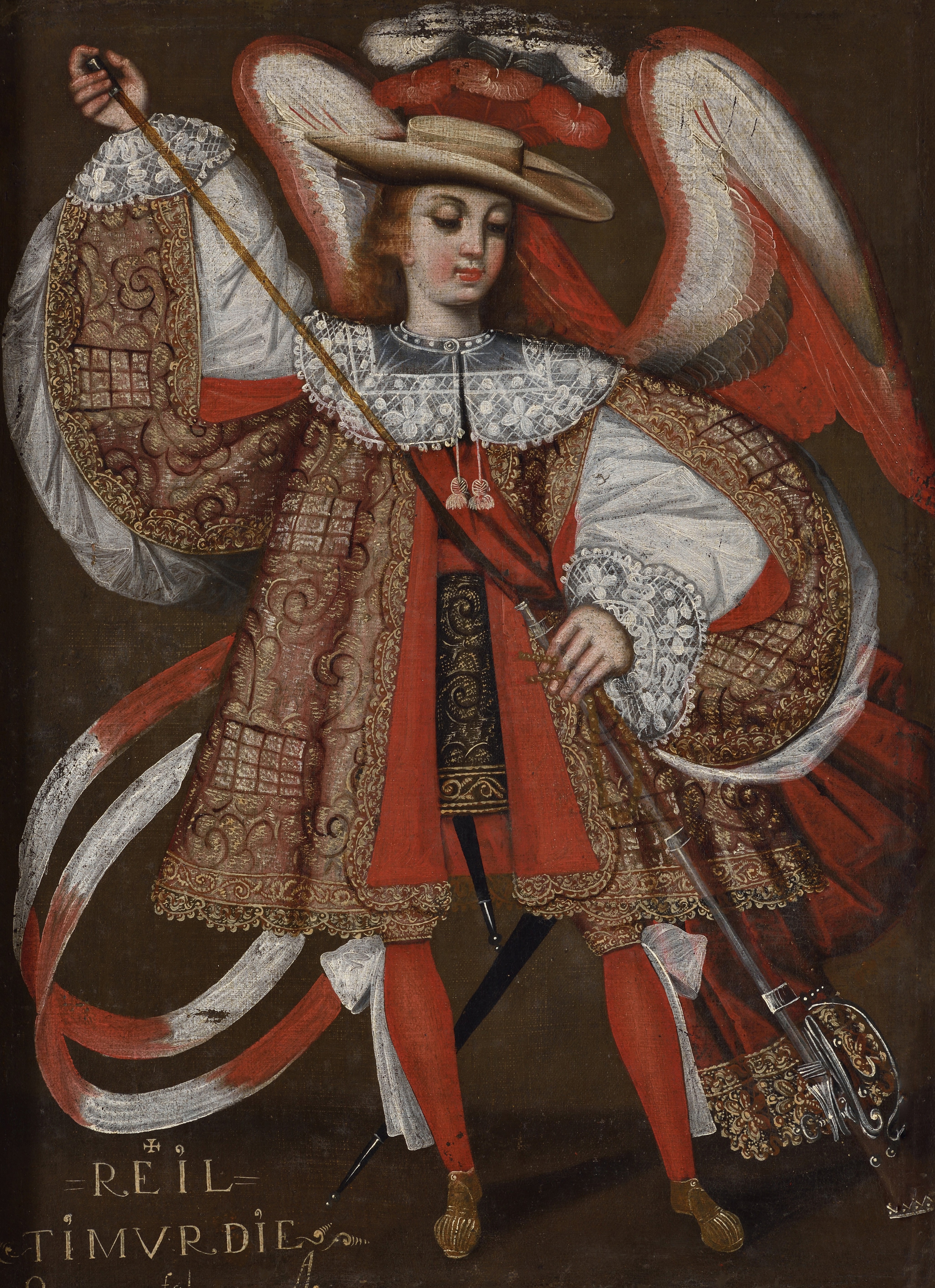
Among the most unique expressions of colonial Peruvian art are the gunman archangels, an unprecedented iconography in European art, developed in the painting workshops of Cusco and Upper Peru around the 1680s. Although the Christian tradition inherited from Europe the conception of angels as celestial beings and archangels as high-ranking messengers, in the Andean context, these figures acquired a new representation.
Instead of the usual attributes of Western iconography, the archangels are depicted carrying guns and dressed in sumptuous clothing that combines local elements with influences from 18th-century French fashion. Hats adorned with feathers, brocades, embroidery, and wide sleeves reinforce their ceremonial and symbolic character. For some authors, this iconography articulates Christian references with ancient Andean notions of winged beings or warrior birds, and even with the figure of the thunder god, Illapa, whose power was early associated with the roar of the gunshot.
Room 3: Angels and Archangels
Among the most unique expressions of colonial Peruvian art are the gunman archangels, an unprecedented iconography in European art, developed in the painting workshops of Cusco and Upper Peru around the 1680s. Although the Christian tradition inherited from Europe the conception of angels as celestial beings and archangels as high-ranking messengers, in the Andean context, these figures acquired a new representation.
Instead of the usual attributes of Western iconography, the archangels are depicted carrying guns and dressed in sumptuous clothing that combines local elements with influences from 18th-century French fashion. Hats adorned with feathers, brocades, embroidery, and wide sleeves reinforce their ceremonial and symbolic character. For some authors, this iconography articulates Christian references with ancient Andean notions of winged beings or warrior birds, and even with the figure of the thunder god, Illapa, whose power was early associated with the roar of the gunshot.
Room 3: Angels and Archangels
Among the most unique expressions of colonial Peruvian art are the gunman archangels, an unprecedented iconography in European art, developed in the painting workshops of Cusco and Upper Peru around the 1680s. Although the Christian tradition inherited from Europe the conception of angels as celestial beings and archangels as high-ranking messengers, in the Andean context, these figures acquired a new representation.
Instead of the usual attributes of Western iconography, the archangels are depicted carrying guns and dressed in sumptuous clothing that combines local elements with influences from 18th-century French fashion. Hats adorned with feathers, brocades, embroidery, and wide sleeves reinforce their ceremonial and symbolic character. For some authors, this iconography articulates Christian references with ancient Andean notions of winged beings or warrior birds, and even with the figure of the thunder god, Illapa, whose power was early associated with the roar of the gunshot.
Saint Rose of Lima
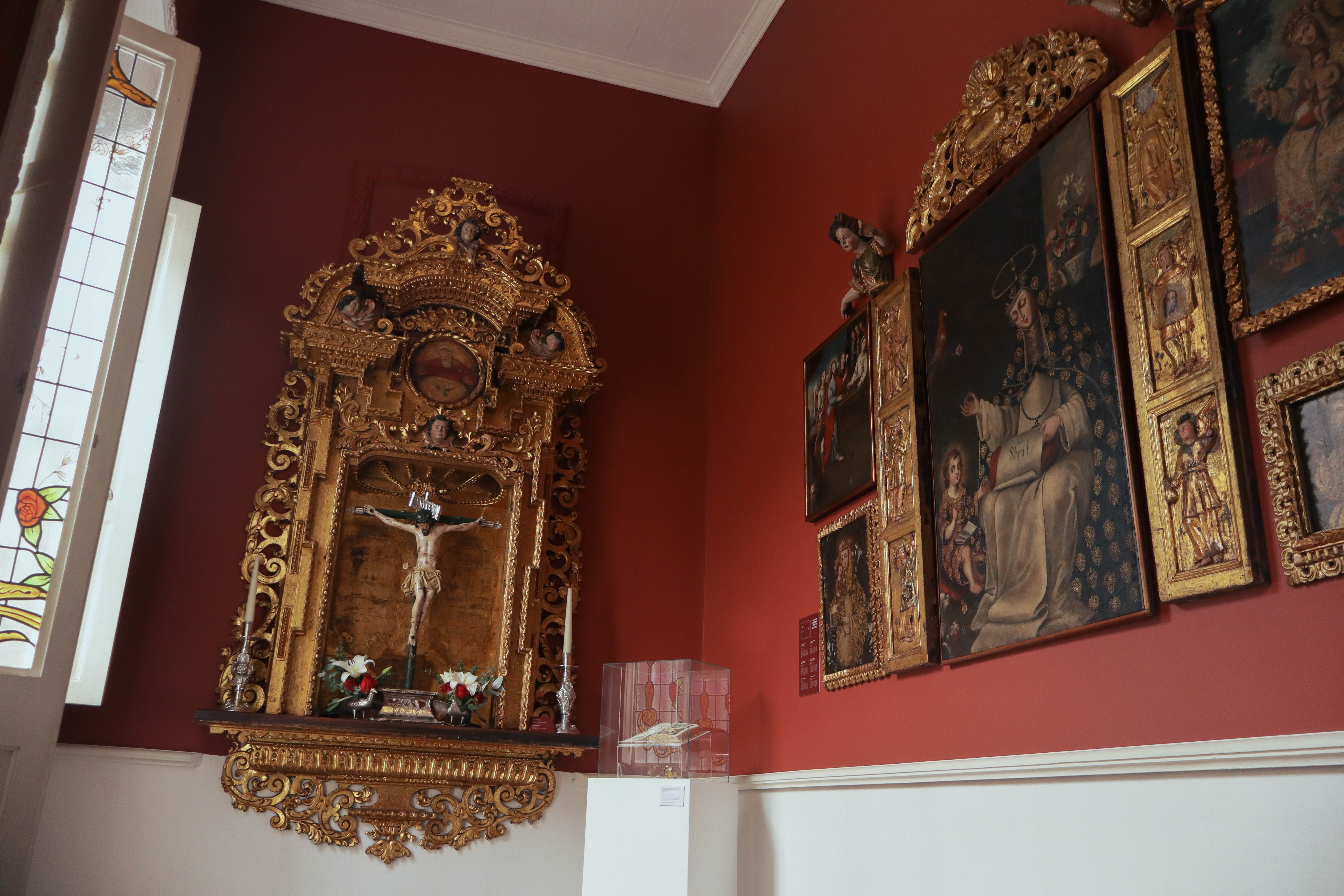
In 17th century Lima, religiosity marked the daily rhythm of the city and defined its identity. Churches, convents, processions, and the ringing of bells turned the urban space into a permanent stage of devotion. By the end of the century, this spiritual intensity gave rise to an exceptional phenomenon: Lima became a cradle of sanctity, housing five contemporary saints, establishing itself as one of the main religious centers of the Hispanic Empire.
In this context, the figure of Saint Rose of Lima is inscribed, the first American saint and the focus of one of the fastest canonization campaigns in history, completed in 1671. Her cult was driven by the convergence of different interests: the Order of Preachers, which affirmed her evangelizing role; the Creoles, who saw in Rose a symbol of legitimization and belonging; and the Spanish Crown, which viewed her as confirmation of the success of the viceroyalty as a project.
Saint Rose of Lima
In 17th century Lima, religiosity marked the daily rhythm of the city and defined its identity. Churches, convents, processions, and the ringing of bells turned the urban space into a permanent stage of devotion. By the end of the century, this spiritual intensity gave rise to an exceptional phenomenon: Lima became a cradle of sanctity, housing five contemporary saints, establishing itself as one of the main religious centers of the Hispanic Empire.
In this context, the figure of Saint Rose of Lima is inscribed, the first American saint and the focus of one of the fastest canonization campaigns in history, completed in 1671. Her cult was driven by the convergence of different interests: the Order of Preachers, which affirmed her evangelizing role; the Creoles, who saw in Rose a symbol of legitimization and belonging; and the Spanish Crown, which viewed her as confirmation of the success of the viceroyalty as a project.
Saint Rose of Lima
In 17th century Lima, religiosity marked the daily rhythm of the city and defined its identity. Churches, convents, processions, and the ringing of bells turned the urban space into a permanent stage of devotion. By the end of the century, this spiritual intensity gave rise to an exceptional phenomenon: Lima became a cradle of sanctity, housing five contemporary saints, establishing itself as one of the main religious centers of the Hispanic Empire.
In this context, the figure of Saint Rose of Lima is inscribed, the first American saint and the focus of one of the fastest canonization campaigns in history, completed in 1671. Her cult was driven by the convergence of different interests: the Order of Preachers, which affirmed her evangelizing role; the Creoles, who saw in Rose a symbol of legitimization and belonging; and the Spanish Crown, which viewed her as confirmation of the success of the viceroyalty as a project.
Room 5: Colonial Imagery
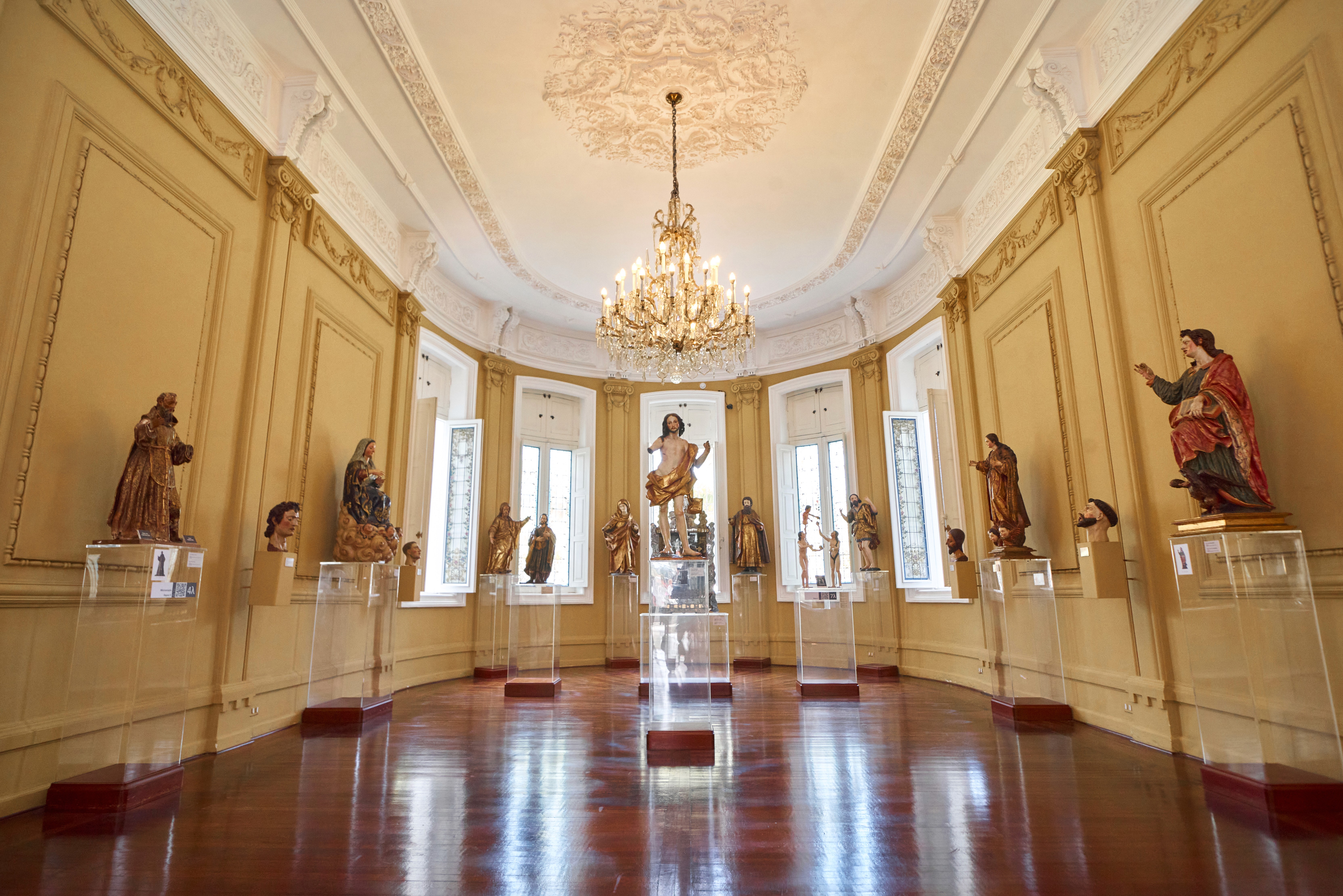
The three-dimensional image was one of the most effective ways to move and bring faith closer to the faithful of the Viceroyalty. The sculpture, capable of occupying space and almost coming to life, appealed to emotion through meticulous detail, expressiveness of gestures, and the possibility of being transported and venerated in temples, convents, homes, or public processions. For these reasons, imagery became one of the most widespread and powerful manifestations of Peruvian viceroyal art.
Since the early 17th century, the influence of the Seville school, led by Juan Martínez Montañés, profoundly marked local sculptural production, evident in the naturalism of wooden carvings and attention to anatomical detail. Along with this European tradition, Andean workshops incorporated materials and knowledge unique to the territory, such as the use of maguey in the Andean south, which led to original technical solutions. These works are the result of collective work: sculptors, painters, and gilders successively intervened in each piece, reflecting the richness of trades and the material complexity characteristic of the production.
Room 5: Colonial Imagery
The three-dimensional image was one of the most effective ways to move and bring faith closer to the faithful of the Viceroyalty. The sculpture, capable of occupying space and almost coming to life, appealed to emotion through meticulous detail, expressiveness of gestures, and the possibility of being transported and venerated in temples, convents, homes, or public processions. For these reasons, imagery became one of the most widespread and powerful manifestations of Peruvian viceroyal art.
Since the early 17th century, the influence of the Seville school, led by Juan Martínez Montañés, profoundly marked local sculptural production, evident in the naturalism of wooden carvings and attention to anatomical detail. Along with this European tradition, Andean workshops incorporated materials and knowledge unique to the territory, such as the use of maguey in the Andean south, which led to original technical solutions. These works are the result of collective work: sculptors, painters, and gilders successively intervened in each piece, reflecting the richness of trades and the material complexity characteristic of the production.
Room 5: Colonial Imagery
The three-dimensional image was one of the most effective ways to move and bring faith closer to the faithful of the Viceroyalty. The sculpture, capable of occupying space and almost coming to life, appealed to emotion through meticulous detail, expressiveness of gestures, and the possibility of being transported and venerated in temples, convents, homes, or public processions. For these reasons, imagery became one of the most widespread and powerful manifestations of Peruvian viceroyal art.
Since the early 17th century, the influence of the Seville school, led by Juan Martínez Montañés, profoundly marked local sculptural production, evident in the naturalism of wooden carvings and attention to anatomical detail. Along with this European tradition, Andean workshops incorporated materials and knowledge unique to the territory, such as the use of maguey in the Andean south, which led to original technical solutions. These works are the result of collective work: sculptors, painters, and gilders successively intervened in each piece, reflecting the richness of trades and the material complexity characteristic of the production.
Room 6: Allegories
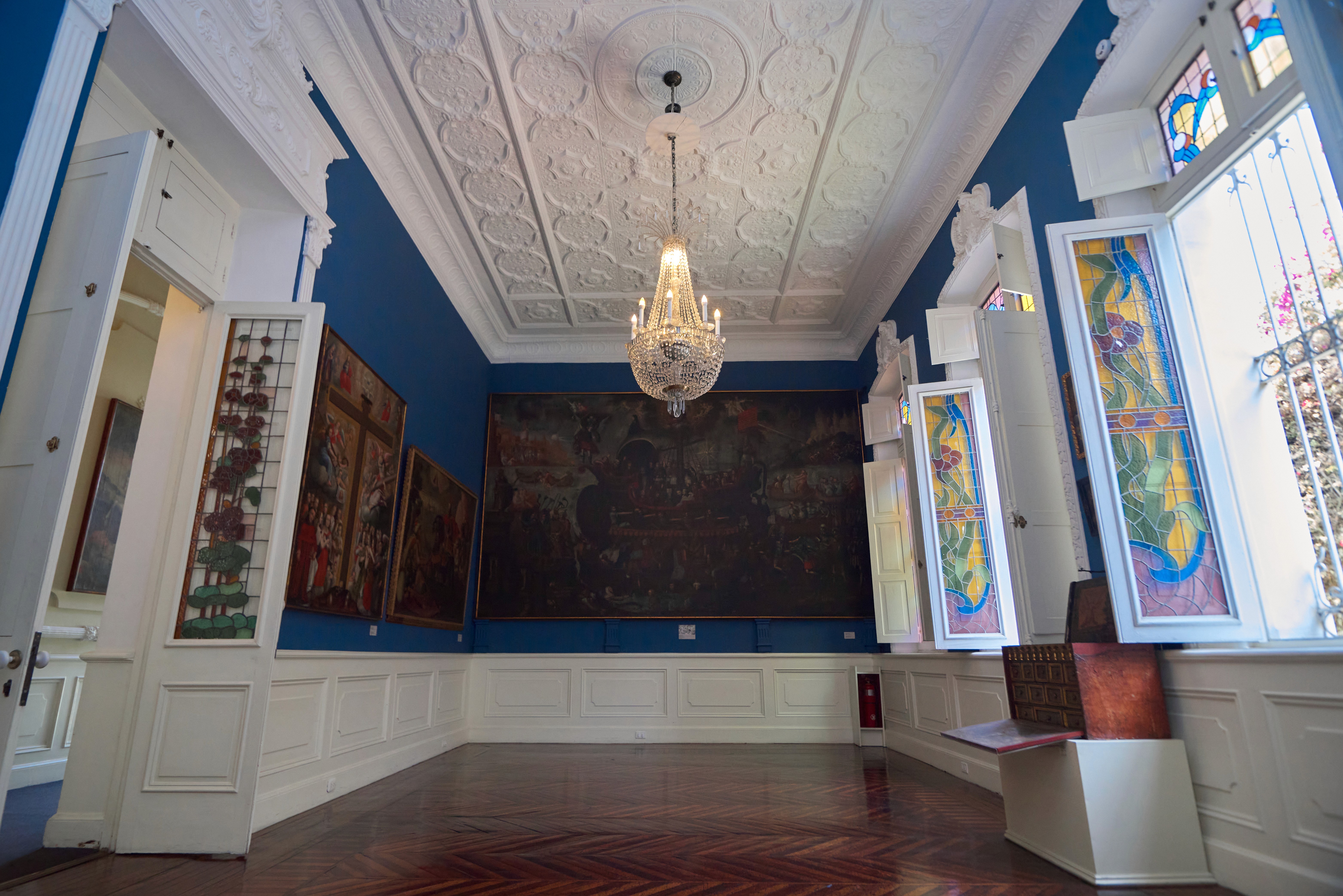
The viceroyal art developed a deeply symbolic language, in which the most complex religious ideas are expressed through images loaded with multiple meanings. The allegorical reading invites the viewer to observe carefully: each figure, gesture, or object serves a precise function and only in combination reveals the message that the work proposes.
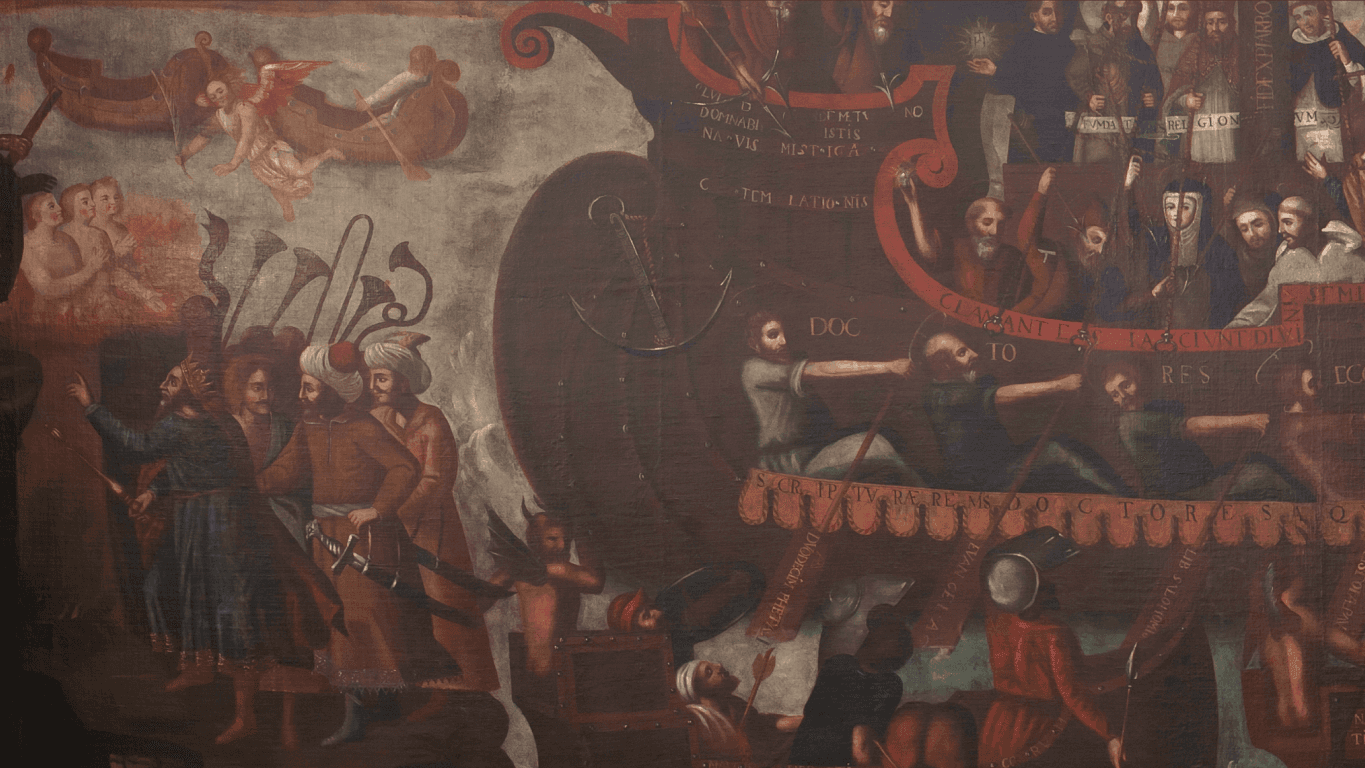
One of the most eloquent representations of this visual logic is The Ship of the Church (18th century). In this monumental composition, the Church is depicted as a vessel moving through turbulent waters: Christ stands at the mast in the form of a cross, the Virgin occupies the sail, the archangel Michael guides the bow, and Saint Peter guards the stern. Saints, fathers of the Church, prophets, and heretics form a dynamic scene that narrates the triumph of Christianity over sin and dissent. The ship thus becomes an image of salvation, a spiritual vehicle driven by collective faith toward redemption.
Room 6: Allegories
The viceroyal art developed a deeply symbolic language, in which the most complex religious ideas are expressed through images loaded with multiple meanings. The allegorical reading invites the viewer to observe carefully: each figure, gesture, or object serves a precise function and only in combination reveals the message that the work proposes.
One of the most eloquent representations of this visual logic is The Ship of the Church (18th century). In this monumental composition, the Church is depicted as a vessel moving through turbulent waters: Christ stands at the mast in the form of a cross, the Virgin occupies the sail, the archangel Michael guides the bow, and Saint Peter guards the stern. Saints, fathers of the Church, prophets, and heretics form a dynamic scene that narrates the triumph of Christianity over sin and dissent. The ship thus becomes an image of salvation, a spiritual vehicle driven by collective faith toward redemption.
Room 6: Allegories
The viceroyal art developed a deeply symbolic language, in which the most complex religious ideas are expressed through images loaded with multiple meanings. The allegorical reading invites the viewer to observe carefully: each figure, gesture, or object serves a precise function and only in combination reveals the message that the work proposes.
One of the most eloquent representations of this visual logic is The Ship of the Church (18th century). In this monumental composition, the Church is depicted as a vessel moving through turbulent waters: Christ stands at the mast in the form of a cross, the Virgin occupies the sail, the archangel Michael guides the bow, and Saint Peter guards the stern. Saints, fathers of the Church, prophets, and heretics form a dynamic scene that narrates the triumph of Christianity over sin and dissent. The ship thus becomes an image of salvation, a spiritual vehicle driven by collective faith toward redemption.
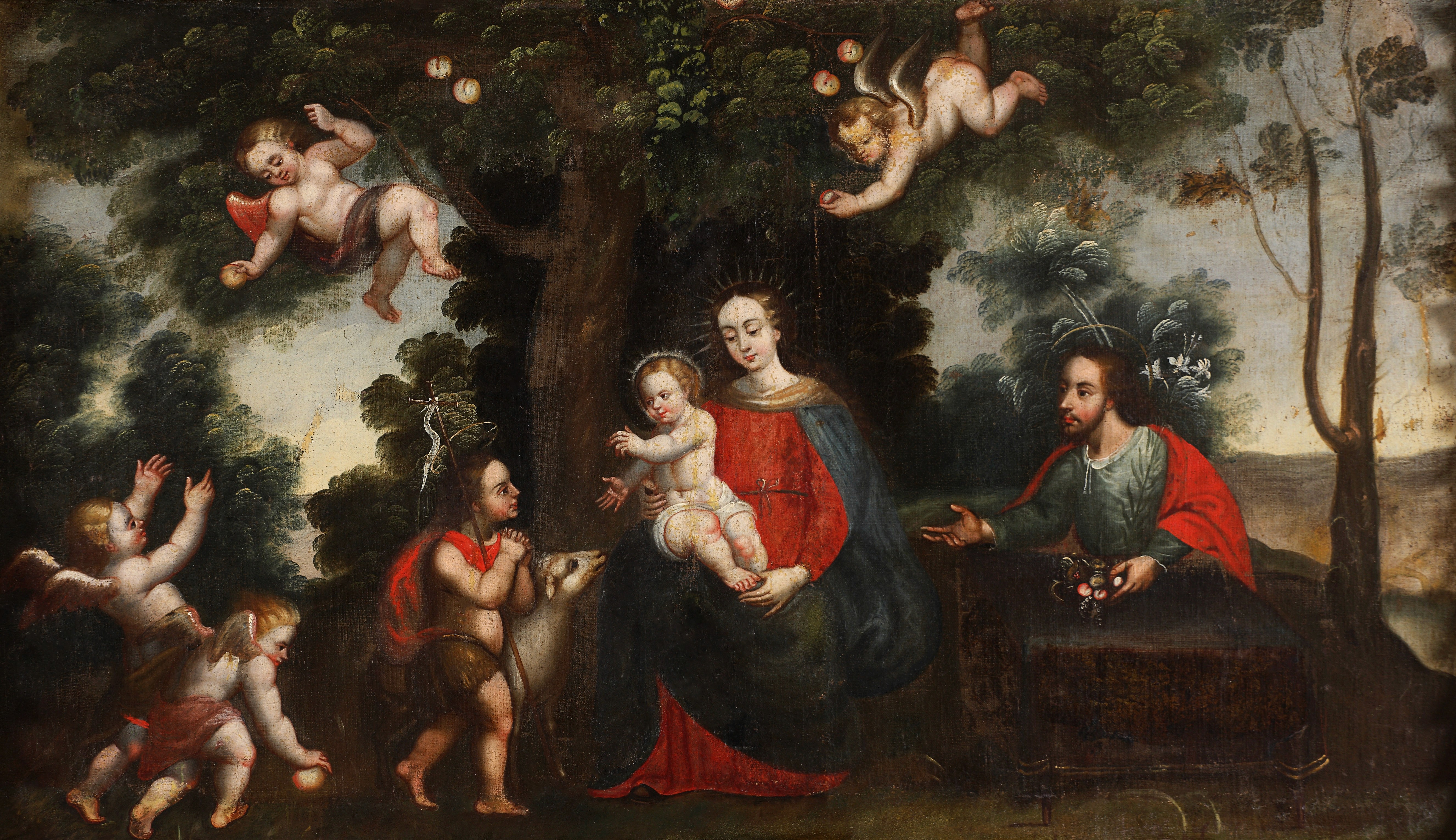
Room 7: Cusco 17th Century
The painting produced in Cusco in the 17th century reveals an artistic scene marked by creative autonomy and the affirmation of a unique voice. Far from a serialized or merely imitative production, the Cusco workshops were made up of artists who developed singular visual languages, capable of engaging with European models and transforming them from their own cultural experience.
After the earthquake that affected the city in the mid-17th century, urban reconstruction spurred an intense artistic activity in churches, chapels, and monasteries. In this context, the Mannerist heritage evolved into a style with its own characteristics: naturalism, rich chromatic variety, meticulous attention to detail, and vast landscapes. Figures such as Diego Quispe Tito and Basilio de Santa Cruz Pumacallao stand out, whose canvases—some signed—demonstrate the prestige achieved by these painters and the consolidation of a Cusco pictorial tradition with its own identity.
Room 7: Cusco 17th Century
The painting produced in Cusco in the 17th century reveals an artistic scene marked by creative autonomy and the affirmation of a unique voice. Far from a serialized or merely imitative production, the Cusco workshops were made up of artists who developed singular visual languages, capable of engaging with European models and transforming them from their own cultural experience.
After the earthquake that affected the city in the mid-17th century, urban reconstruction spurred an intense artistic activity in churches, chapels, and monasteries. In this context, the Mannerist heritage evolved into a style with its own characteristics: naturalism, rich chromatic variety, meticulous attention to detail, and vast landscapes. Figures such as Diego Quispe Tito and Basilio de Santa Cruz Pumacallao stand out, whose canvases—some signed—demonstrate the prestige achieved by these painters and the consolidation of a Cusco pictorial tradition with its own identity.
Room 7: Cusco 17th Century
The painting produced in Cusco in the 17th century reveals an artistic scene marked by creative autonomy and the affirmation of a unique voice. Far from a serialized or merely imitative production, the Cusco workshops were made up of artists who developed singular visual languages, capable of engaging with European models and transforming them from their own cultural experience.
After the earthquake that affected the city in the mid-17th century, urban reconstruction spurred an intense artistic activity in churches, chapels, and monasteries. In this context, the Mannerist heritage evolved into a style with its own characteristics: naturalism, rich chromatic variety, meticulous attention to detail, and vast landscapes. Figures such as Diego Quispe Tito and Basilio de Santa Cruz Pumacallao stand out, whose canvases—some signed—demonstrate the prestige achieved by these painters and the consolidation of a Cusco pictorial tradition with its own identity.
Room 8: Cusco 18th Century
The 18th century marked the peak of expansion and prestige for the Cusco school. The artistic production of the Imperial City consolidated itself as a dominant model in the viceroyalty, with extensive circulation and sustained demand that turned Cusco into the main artistic center of these territories.
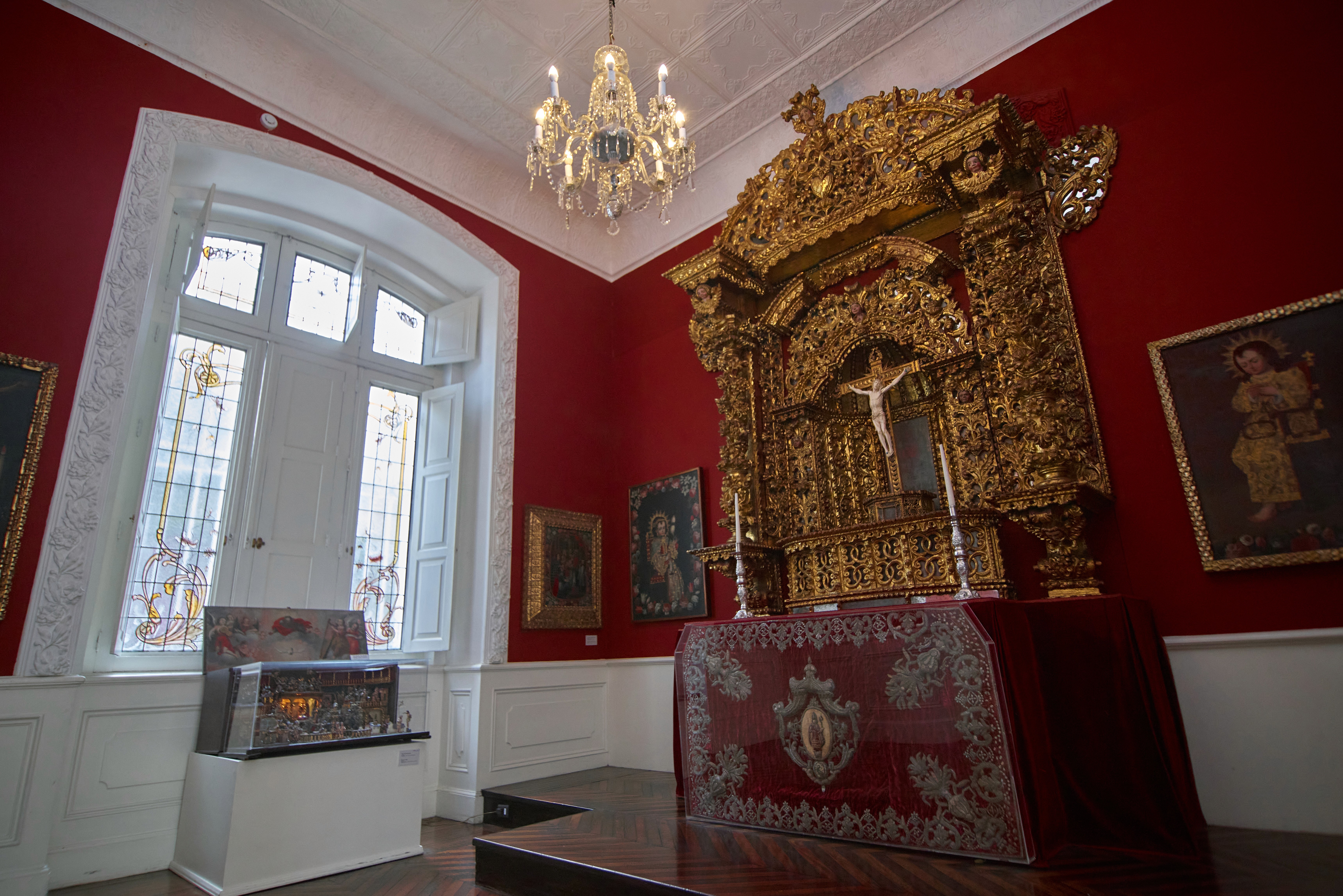
Painters such as Marcos Zapata, Basilio Pacheco, and Mauricio García achieved established status and adapted their visual language to an increasingly broad audience. The Hispanic Baroque acquired a unique expression here, characterized by the prominent use of gold as a sign of splendor and abundance. The works in this room stand out for the application of gilding through techniques such as gold leaf and over-gilding, as well as for the diversification of artistic crafts: painting, sculpture, wood carving, goldsmithing, and silversmithing. This technical and material breadth reflects not only the aesthetic rise of the Cusco school but also its economic consolidation and its ability to respond to new demands, both religious and secular.
Room 8: Cusco 18th Century
The 18th Century marked the moment of greatest expansion and prestige of the Cusco school. The artistic production of the Imperial City was consolidated as a dominant model in the viceroyalty, with broad circulation and sustained demand that made Cusco the main artistic center of these territories.
Painters like Marcos Zapata, Basilio Pacheco, and Mauricio García achieved a renowned status and adapted their visual language to an increasingly wider audience. Hispanic Baroque acquired its own expression here, characterized by the prominent use of gold as a sign of splendor and abundance. The works in this room stand out for their application of gilding through techniques such as gold leaf and over-gilding, as well as for the diversification of artistic crafts: painting, sculpture, wood carving, goldsmithing, and silversmithing. This technical and material breadth reflects not only the aesthetic rise of the Cusco school but also its economic consolidation and its ability to respond to new demands, both religious and secular.
Room 8: Cusco 18th Century
The 18th Century marked the moment of greatest expansion and prestige of the Cusco school. The artistic production of the Imperial City was consolidated as a dominant model in the viceroyalty, with broad circulation and sustained demand that made Cusco the main artistic center of these territories.
Painters like Marcos Zapata, Basilio Pacheco, and Mauricio García achieved a renowned status and adapted their visual language to an increasingly wider audience. Hispanic Baroque acquired its own expression here, characterized by the prominent use of gold as a sign of splendor and abundance. The works in this room stand out for their application of gilding through techniques such as gold leaf and over-gilding, as well as for the diversification of artistic crafts: painting, sculpture, wood carving, goldsmithing, and silversmithing. This technical and material breadth reflects not only the aesthetic rise of the Cusco school but also its economic consolidation and its ability to respond to new demands, both religious and secular.